Mushroom Substrate Guide: Types, Recipes and Preparation
A mushroom substrate is the material that your mycelium eats and grows through before it makes mushrooms. Think of it as the soil of your grow. The right substrate gives the mycelium food, water and air. The wrong one leads to slow growth, small flushes or mold. In this guide, you will learn which substrate to choose and how to prepare it.
What Is a Mushroom Substrate?
In short, a mushroom substrate is any bulk material that mycelium can colonize. Growers first grow mycelium on grain. This is called grain spawn. Then they mix the spawn with a larger amount of substrate. The substrate holds moisture and gives the mycelium room to spread. Once it is fully colonized, the mushrooms start to form on the surface.
Common Types of Mushroom Substrate
Different species like different food. Here are the most common options:
- Coco coir and vermiculite: the classic mix for cubensis. It holds water well and rarely gets contaminated.
- Straw: cheap and great for oyster mushrooms. You only need to pasteurize it.
- Hardwood sawdust: best for wood-loving species such as shiitake and lion’s mane.
- Masters mix: half hardwood sawdust and half soy hulls. It gives very high yields, but it must be sterilized.
- Manure: rich in nutrients and loved by cubensis, but it carries more bacteria.
Coir and Vermiculite Mushroom Substrate Recipe
Coir, vermiculite and gypsum (often called CVG) is the easiest mushroom substrate for beginners. For one batch, you need:
- One 650 g brick of coco coir
- About 2 litres of vermiculite
- 100 to 200 g of gypsum
- About 4 to 5 litres of boiling water
First, put the coir brick in a clean bucket. Next, pour the boiling water over it and wait until the brick falls apart. Then mix in the vermiculite and gypsum. Close the lid and let it cool overnight. This simple step also pasteurizes the mix. Want to know why the gypsum matters? Read our guide on gypsum for mushrooms.
Getting the Moisture Right: Field Capacity
Water content is the most common problem with any substrate. The goal is field capacity. This means the substrate holds as much water as it can without dripping. To test it, squeeze a handful as hard as you can. A few drops should come out, but not a steady stream. If it is too dry, add a little water. If it is too wet, add some dry coir or vermiculite.
Pasteurize or Sterilize Your Mushroom Substrate?
Low-nutrient substrates, such as coir and straw, only need pasteurization. Pasteurizing kills most competitors but leaves some helpful microbes alive. You can do it with boiling water or by heating the substrate to about 65 to 80°C for an hour or two.
Rich substrates, such as masters mix or supplemented sawdust, need full sterilization. Otherwise, mold grows faster than your mycelium. For this, you need a pressure cooker or autoclave at 121°C for about two hours. Many growers fill autoclavable Unicorn bags and sterilize the substrate inside them.
How Much Spawn per Substrate?
Most growers mix one part grain spawn with two to four parts substrate. More spawn means faster colonization and less risk of contamination. Less spawn saves money, but the grow takes longer. For a first grow, we recommend a ratio of about one to two. After mixing, spread the substrate in an even layer in a grow bag or tub.
Ready-Made Mushroom Substrate
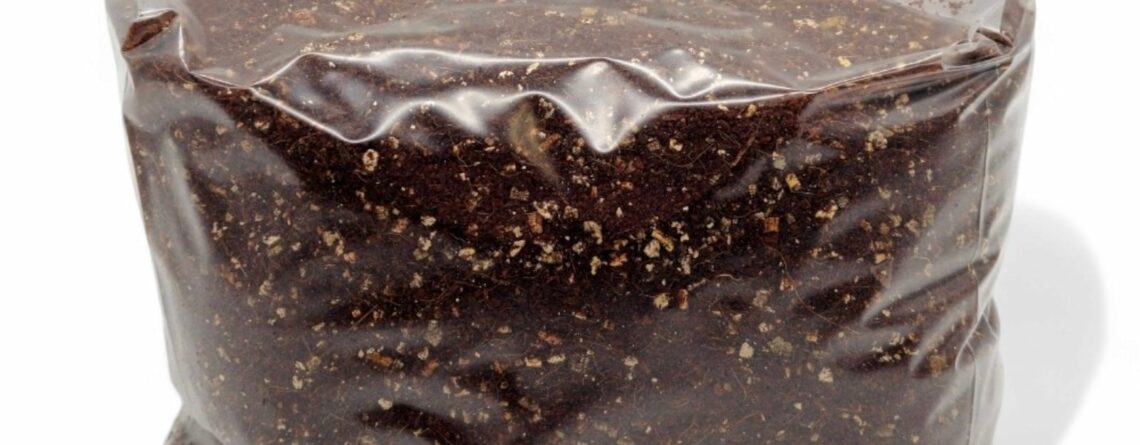
Don’t want to mix and pasteurize your own? Our ready-to-use mushroom substrate is a mix of 75% coir and 25% vermiculite. We hydrate it to field capacity and sterilize it in a filter-patch bag. Choose the 2000cc bag, the 4000cc bag, or the 6000cc bag for a monotub. Just add colonized grain spawn and you are ready to go.
Common Substrate Mistakes
- Too wet: standing water at the bottom invites bacteria.
- Too dry: the mycelium stalls and the pins dry out.
- Too rich without sterilizing: extra nutrients feed mold as well.
- Too little spawn: slow colonization gives contaminants a head start.
New to growing? Start with our step-by-step guide on how to grow mushrooms. For more background on growing methods, see the Wikipedia article on fungiculture.